


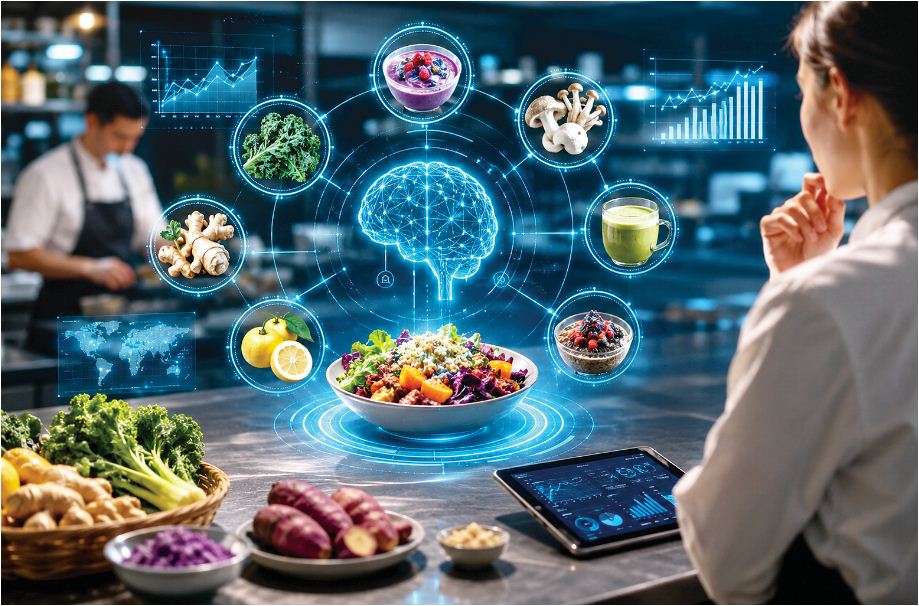
Jaipur | Charu Bhatia | The next food sensation may not emerge from a celebrity chef or an influencer’s Instagram reel, it could first be identified by artificial intelligence. As consumer preferences evolve at lightning speed, food brands, restaurant chains and retailers are increasingly turning to AI-powered analytics to predict what people will crave before a trend becomes mainstream. Traditionally, food trends gained momentum through social media, television or word-of-mouth. Today, AI can analyse millions of data points, from online searches and restaurant orders to grocery purchases, recipe websites and regional consumption patterns, to identify emerging preferences weeks or even months in advance. Leading global food companies are already integrating predictive analytics into product development. AI platforms scan conversations across digital channels, monitor seasonal buying behaviour and detect subtle shifts in consumer interest. For instance, a gradual rise in searches for ingredients like yuzu, ube or adaptogenic mushrooms may signal an opportunity for brands to launch products before demand peaks. Restaurants are also embracing predictive technology. By analysing customer orders, weather conditions, local events and purchasing history, AI helps restaurants refine menus, optimise inventory and introduce limited-time offerings with greater confidence. Instead of relying solely on intuition, chefs and marketers can make data-backed decisions that reduce waste while improving customer satisfaction.
The technology extends beyond menu planning. Food manufacturers are using AI to forecast flavour combinations, identify nutritional trends and personalise products for different consumer segments. As interest grows in gut health, high-protein diets and functional foods, AI enables brands to respond more quickly to changing wellness preferences.
However, industry experts caution that algorithms cannot fully replace human creativity. Viral food trends are often driven by culture, emotion and storytelling-factors that are difficult for machines to quantify. A dish can become an overnight sensation because of a celebrity endorsement, a cultural event or an unexpected social media challenge, variables that remain difficult to predict with complete accuracy.
There are also concerns around data privacy and the possibility of reinforcing short-term fads rather than encouraging genuine culinary innovation. Over-reliance on predictive models could lead companies to produce similar products, reducing diversity and experimentation in the marketplace. Despite these challenges, AI is becoming an increasingly valuable strategic tool for the food industry. Rather than replacing chefs, food scientists or marketing teams, it serves as an early-warning system, helping businesses identify opportunities, reduce product development risks and respond faster to evolving consumer demand. As competition intensifies and food trends become more dynamic, companies that successfully combine AI-driven insights with human creativity are likely to gain a significant competitive edge. In the future, the next viral food phenomenon may be anticipated by an algorithm long before it dominates TikTok feeds or supermarket shelves.