
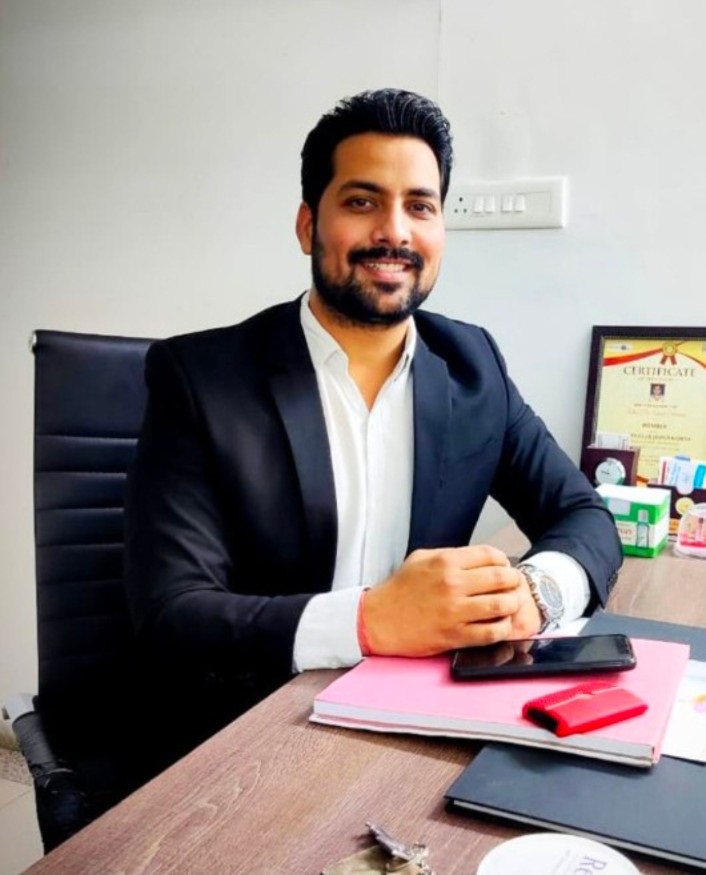
Charu Bhatia, Senior News Editor, Business Remedies, in conversation with Dr. Vishvesh Dave, Head of the Department of Physiotherapy at Rishab Multispeciality Hospital, Jaipur
Physiotherapy has emerged as an integral part of modern healthcare, extending far beyond pain relief to encompass preventive care, functional rehabilitation and improved quality of life. From managing neurological disorders and musculoskeletal conditions to helping patients regain mobility after serious injuries, physiotherapy plays a crucial role in restoring physical independence and confidence. With advancements in rehabilitation technology, robotics and evidence-based treatment approaches, the field continues to evolve.
 With over a decade of professional experience, Dr. Vishvesh Dave, Head of the Department of Physiotherapy at Rishab Multispeciality Hospital, Jaipur, has been closely associated with the growth and development of physiotherapy. From establishing Physio Care, which has expanded to several branches across Jaipur, to founding Physio Unity Club for professional knowledge-sharing and public awareness, his journey reflects a commitment to advancing the profession. A specialist in neurological physiotherapy, he is also pursuing his PhD from Suresh Gyan Vihar University.
In this conversation, Dr. Dave discusses his professional journey, the growing significance of physiotherapy, emerging technologies, changing lifestyle-related health concerns, challenges within the profession and the importance of patient-centred rehabilitation.
You are currently serving as the HOD of Physiotherapy at Rishab Multispecialty Hospital, Jaipur. Tell us about your professional journey and what inspired you to enter this field.
A: My journey in physiotherapy began in 2009, when I joined Mahatma Gandhi Hospital to pursue my studies. At that time, awareness about physiotherapy was quite limited, and the profession faced several challenges, including delays in examinations and the absence of a dedicated regulatory council. However, I recognised its immense potential in helping people recover and improve their quality of life.
I completed my master’s degree in Physiotherapy from Dehradun. By then, awareness about the profession had started increasing. I then established Physio Care, which has gradually expanded to approximately five to six branches across Jaipur. I also founded Physio Unity Club to promote professional networking, knowledge-sharing and public awareness through conferences, seminars and various activities.
Additionally, I have worked as a professor of physiotherapy at MJRP University, Jaipur. Currently, I am pursuing my PhD from Suresh Gyan Vihar University.
Today, as HOD of Physiotherapy at Rishab Multispecialty Hospital, my focus is on evidence-based treatment and comprehensive rehabilitation. For me, physiotherapy is not just a profession but a commitment to helping people regain their independence and confidence.
What are the different branches of physiotherapy, and what is your area of specialisation?
 A: Physiotherapy has several specialised branches, including orthopaedic, neurological, sports, musculoskeletal, paediatric, cardiopulmonary, oncology and obstetric and gynaecological physiotherapy. Each addresses specific health conditions and rehabilitation requirements.
My area of specialisation is neurological physiotherapy. I primarily work with patients suffering from conditions affecting the brain, spinal cord and nervous system, including stroke, paralysis, spinal cord injuries, Parkinson’s disease and Alzheimer’s disease.
Neurological rehabilitation requires patience, consistency and an individualised approach. Our objective is to improve mobility, balance, coordination and functional independence so that patients can lead better lives.
What are the key components of your personalised treatment approach?
A: The first step is always a comprehensive assessment of the patient. We evaluate their medical history, symptoms, physical condition and functional limitations to understand the underlying cause of the problem. Based on this assessment, we develop an individualised treatment plan.
In neurological cases, family counselling is equally important because recovery can be a lengthy process, and outcomes vary from patient to patient. Families must understand the condition and the importance of consistency in rehabilitation.
For patients experiencing back and neck pain, we evaluate posture, muscle strength and movement patterns. We also conduct awareness sessions for corporate employees, educating them about correct sitting posture, stretching and regular physical activity.
Our ultimate objective is to address the underlying problem, improve functionality and help patients manage their health effectively.
What are some of the major therapies and techniques used in modern physiotherapy?
 A: Physiotherapy offers several treatment techniques depending on the patient’s condition. Electrotherapy is commonly used to help manage pain and stimulate muscles. Therapeutic ultrasound and other physical modalities may also support pain management and rehabilitation.
Exercise therapy remains one of the most important components, helping improve strength, flexibility, coordination and mobility.
Modern rehabilitation has also incorporated robotic-assisted technologies, which facilitate repetitive and controlled movements, particularly in patients with neurological impairments. Hydrotherapy is another useful technique, as exercising in water can reduce stress on joints and make movement easier.
We also use appropriate light-based therapeutic modalities in selected cases. However, every technique must be chosen after proper assessment rather than applied uniformly to all patients.
What are the most common health problems you encounter across different age groups?
A: Changing lifestyles have contributed significantly to health problems across age groups. Among children, we increasingly encounter posture-related issues, neck discomfort and back pain, often associated with excessive screen time and reduced outdoor activities.
In young and middle-aged adults, cervical pain, lower back pain, obesity-related problems and postural dysfunctions are common. Corporate employees who spend long hours sitting at desks are particularly vulnerable to spinal and musculoskeletal problems.
Among older adults, we frequently encounter arthritis, knee pain, osteoporosis and age-related mobility difficulties. Neurological conditions such as Parkinson’s disease and Alzheimer’s disease are also significant concerns.
Timely assessment, regular physical activity and preventive healthcare can help manage many of these conditions effectively.
How is technology transforming physiotherapy?
A: Technology is playing an increasingly important role in modern physiotherapy. Artificial intelligence, virtual reality and interactive gaming-based rehabilitation are making exercises more engaging and personalised. Real-time tracking also helps therapists monitor patient performance and progress.
Mirror therapy is another useful technique, particularly in neurological rehabilitation, where visual feedback can support motor recovery.
Robotic-assisted rehabilitation has further expanded treatment possibilities for patients with severe neurological conditions, including paralysis and spinal cord injuries. These technologies facilitate repetitive and controlled movements.
How has public awareness about physiotherapy changed over the years?
A: I have witnessed a remarkable change in awareness since entering the profession in 2009. Earlier, people generally associated physiotherapy with major injuries, surgeries or serious medical conditions. Today, they increasingly understand its importance in pain management, posture correction, preventive healthcare and rehabilitation.
Doctors are also referring more patients to physiotherapists, reflecting better interdisciplinary collaboration. Social media has played an important role in educating people about exercise, physical activity and healthy lifestyles.
Patients are now more proactive and sometimes approach physiotherapists directly for musculoskeletal concerns. Physiotherapy complements medical treatment by focusing on movement, functional recovery and long-term physical wellbeing.
Is physical rehabilitation also connected to mental and emotional wellbeing?
A: Absolutely. Physical rehabilitation and mental wellbeing are closely interconnected. A medical condition affects not only the body but also a person’s confidence, emotional stability and outlook towards life.
For instance, patients experiencing paralysis may initially believe that they will never return to normal activities. This can create anxiety, fear and frustration. In such situations, counselling and emotional support become essential.
We explain the condition, establish realistic goals and encourage patients by sharing appropriate examples of successful rehabilitation. Family support also plays a significant role in recovery.
Our responsibility is not limited to improving physical movement; we must also help patients regain confidence, independence and hope.
What warning signs should people never ignore?
A: Pain or discomfort that interferes with activities of daily living should never be ignored. If someone experiences difficulty walking, climbing stairs, sitting, standing or performing routine activities, they should seek medical evaluation.
Persistent neck pain, back pain, joint stiffness, reduced mobility and balance difficulties also require attention. People should avoid self-diagnosis and depending entirely on temporary remedies.
Sudden weakness, facial drooping, difficulty speaking or sudden loss of balance may indicate a medical emergency and require immediate medical attention.
Early consultation can help identify problems and facilitate timely treatment.
Has physiotherapy successfully reached smaller towns and Tier 3 cities?
A: To a considerable extent, yes, although there is still considerable scope for improvement. Through Physio Unity Club and other initiatives, we have organised awareness campaigns and free medical check-up camps in places such as Sri Madhopur and Dudu.
These activities have helped educate local communities about physiotherapy and its importance. However, one common misconception, particularly in rural areas, is that people engaged in agricultural work do not need exercise or physiotherapy because their daily work already involves physical activity.
The reality is that physical labour and structured therapeutic exercise are different. Repetitive movements and improper lifting techniques can also cause musculoskeletal problems.
We need more awareness campaigns, accessible rehabilitation facilities and qualified professionals to make physiotherapy available to smaller towns and villages.
What are the biggest challenges faced by physiotherapists in India?
A: One major challenge is the need for a stronger regulatory framework and effective professional oversight. Physiotherapy requires clear professional standards and accountability to ensure quality patient care.
Another concern is malpractice. Individuals without adequate qualifications or training sometimes operate clinics, which can compromise patient safety and affect the credibility of the profession.
It is important to strengthen regulation, promote qualified practitioners and create greater recognition of physiotherapists as essential members of the healthcare system.
What changes would you like to see in physiotherapy education?
A: I believe physiotherapy education needs a better balance between theoretical knowledge and practical clinical exposure. During my academic years, delayed examinations were a major concern. Today, one important challenge is the excessive emphasis on theoretical learning compared with practical training.
What message would you like to give aspiring physiotherapists?
A: My message to aspiring physiotherapists is to make knowledge, clinical competence and patient welfare the foundation of their careers. Every patient is different, and every case requires a thorough, assessment-based approach.
Never begin treatment without understanding the patient’s condition and identifying the possible causes. An accurate assessment is the foundation of effective treatment.
Young professionals should remain curious, continuously upgrade their knowledge and stay updated with scientific and technological developments.
Most importantly, physiotherapy is a service-oriented profession. Financial growth is important, but patient welfare must always come first.
The greatest satisfaction comes from seeing a patient regain independence, return to everyday activities and live with renewed confidence. That, to me, is the true purpose of being a physiotherapist.