

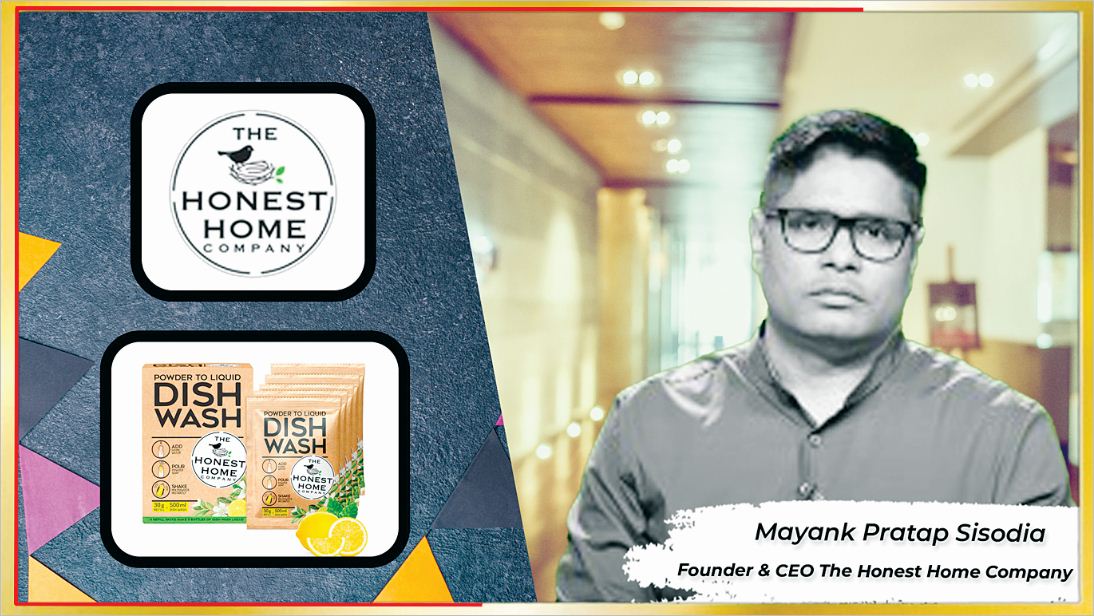
Rajshree Upadhyaya | Business Remedies | Mayank Pratap Sisodia’s journey with The Honest Home Company began with a personal discomfort rather than a market gap. Coming from a farming background, he grew up closely observing the relationship between nature and daily living, a perspective that stayed with him even as his career took him into large FMCG organisations and consumer businesses. Years spent in sales and distribution roles gave him a ringside view of how deeply plastic packaging and chemical-heavy products had penetrated Indian households. That realisation eventually pushed him to step away from conventional corporate paths and, in 2019, establish The Honest Home Company with a simple but ambitious goal of making sustainability a daily habit rather than a niche choice.
From its earliest days, the brand positioned itself around honesty in formulation and responsibility in packaging. Instead of launching premium lifestyle products meant for a limited audience, Mayank focused on essentials that every household already used. The Honest Home Company entered the market with plastic-free facial tissues, biodegradable garbage bags, food wrapping papers, kitchen towels, and later expanded into powder-to-liquid floor cleaners and dishwash refills. The idea behind these products was practical sustainability, where consumers could reduce plastic usage by reusing bottles and switching to biodegradable materials without changing their routines drastically. This balance between convenience and conscience became central to the brand’s appeal.
Building such a company was not straightforward. Convincing suppliers, retailers, and even early consumers that eco-friendly products could perform as well as conventional alternatives required patience and constant education. However, steady adoption and repeat customers began validating the model. By the time The Honest Home Company walked into Shark Tank India Season 3, it had already built a recognisable identity in the sustainable home care space with growing online and offline presence. On the show, Mayank asked for Rs. 1 crore in exchange for 2 percent equity, backing his ask with a clear long-term vision rather than short-term hype.
The pitch sparked detailed discussions around margins, scalability, and consumer behaviour. While several sharks appreciated the mission, it was Amit Jain who ultimately invested, offering Rs. 1 crore for 3 percent equity along with a 1 percent royalty until Rs. 1.5 crore was recovered. The deal not only adjusted the valuation but also brought strategic backing that proved crucial. The Shark Tank appearance dramatically amplified brand awareness, placing The Honest Home Company in front of millions of households that were increasingly open to sustainable alternatives but unsure where to begin.
After Shark Tank, the company focused on strengthening operations and expanding its portfolio. The emphasis remained on eco-friendly home care and daily-use essentials, with continuous refinements in formulation, sourcing, and packaging. The powder-to-liquid format gained particular traction because it addressed cost, storage, and environmental impact simultaneously. The brand also broadened its distribution, deepening its presence across major e-commerce platforms while gradually expanding offline retail reach, especially in urban and semi-urban markets.
Investor confidence in the business translated into further capital support, including a pre-Series A funding round that helped fuel expansion plans. Rather than chasing aggressive diversification, Mayank stayed anchored to the core philosophy of the company, ensuring that every new product aligned with the promise of reduced waste and safer ingredients. This discipline helped The Honest Home Company stand out in a crowded sustainability space often diluted by greenwashing.
As of now, The Honest Home Company is operational and active, continuing to scale its offerings and consumer base. What began as one founder’s concern about plastic waste has evolved into a growing brand shaping how Indian homes think about everyday consumption. Mayank Pratap Sisodia’s story reflects a shift in entrepreneurship where impact and commerce move together, quietly proving that sustainable living can be practical, affordable, and deeply mainstream.
 Written & Edited By:
Rajshree Upadhyaya