
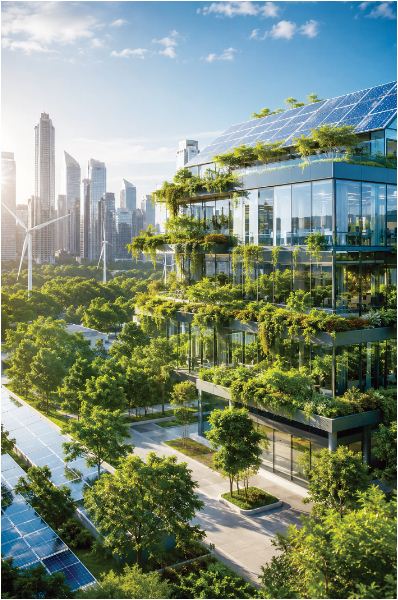
Jaipur | Charu Bhatia | The construction industry is undergoing a significant transformation as sustainability moves from being a regulatory requirement to a core business strategy. Among the biggest trends shaping the sector is the growing adoption of net-zero buildings, structures designed to produce as much energy as they consume over the course of a year through energy efficiency, renewable energy integration and smart building technologies. Once considered a niche concept, net-zero construction is increasingly becoming a commercially viable investment for developers, businesses and institutional investors.
One of the primary reasons behind this shift is the long-term financial advantage. Although net-zero buildings may involve higher upfront construction costs due to advanced insulation, energy-efficient systems and renewable energy installations, these investments often translate into lower operating expenses. Reduced electricity consumption, lower maintenance costs and improved resource efficiency help owners recover their initial investment over time while enhancing the overall value of the property. Corporate sustainability commitments are also accelerating demand for green buildings. As companies adopt environmental, social and governance (ESG) goals, they are seeking office spaces and commercial properties that align with their carbon reduction targets. Buildings with recognised green certifications are increasingly attracting premium tenants, higher occupancy rates and stronger investor interest, making sustainability a competitive business advantage rather than just an environmental initiative.
Technology is playing a vital role in enabling net-zero construction. Smart energy management systems, IoT-enabled sensors, high-performance glass, efficient HVAC systems and rooftop solar installations are allowing buildings to optimise energy consumption in real time. Digital tools such as Building Information Modelling (BIM) are further helping architects and developers design energy-efficient structures from the planning stage, reducing material waste and improving project efficiency. Government policies and evolving regulations are providing additional momentum. Across several markets, incentives for renewable energy adoption, green building certifications and stricter energy efficiency standards are encouraging developers to integrate sustainability into new projects. Financial institutions are also increasingly supporting environmentally responsible developments through green financing options and sustainability-linked loans.
Another factor strengthening the business case is changing consumer preferences. Homebuyers and commercial tenants are becoming more conscious of energy efficiency, indoor air quality and lower utility costs. Properties designed with sustainable features are often perceived as healthier, future-ready investments that offer greater long-term value.
As urbanisation continues and climate-related challenges become more pressing, the construction industry is expected to place greater emphasis on low-carbon development. Net-zero buildings are no longer viewed solely as environmentally responsible projects; they are emerging as strategic business assets that improve operational efficiency, enhance brand reputation and deliver stronger financial returns. For developers willing to invest in sustainable innovation today, net-zero construction is rapidly becoming a defining trend in the future of the built environment.